Michael Gaines
Photographer. Visual Artist. Educator. Historian.
Honor & Legacy, pt. 1
Laser Diffractograms

What is a laser diffractogram?
In early 2026 I had the opportunity to attend my first Society for Photographic Education's national conference, in Atlanta, GA. During a portfolio event I met Lynne Bierbaum, who had some of the most interesting prints on her table I had ever seen. I could not figure out how she made them. As she explained them I was fascinated - using electrically charged copper plates, darkroom paper, and her own hand and botanicals to make prints. She then told me about shining a laser pointer through a cut glass object onto darkroom paper to make prints, the paper catching all of the light diffractions from the cut glass. I had never heard of this and began thinking of all the possibilities, including whether this was powerful enough to expose a negative as well.
In April 2025 I lost my last grandparent and the one I was closest with. Our family was fortunate in that her passing was prolonged and we got to say our goodbyes. It didn't hurt any less, but we were given a sense of closure not many people are afforded. After Grammie's passing I realized it had been 25 years since my first grandparent had passed, and soon began to unpack a lot of feelings around this.
I come from a family of collectors, and a lot of things get passed from one generation to the next. One of the most common things to be passed around are cut glass objects, typically given initially as gifts for anniversaries, weddings, and retirements. Each object holds a certain energy and special significance as it related to the person who originally owned it. After returning from the SPE conference in Atlanta, I began to look at these heirlooms in a different light (literally), wondering how they would react to the laser pointer and what kinds of patterns they would make. After some trial and error I discovered that green is the best color laser pointer to use: everything in a photo darkroom is red light safe, so a red laser pointer is useless, and the wavelength of a blue laser pointer is so intense that it exposes the paper immediately, regardless how quick you expose. Green is a step below blue so you have to be quick; each of the images below have an exposer of, at most, one second.
I also found that even the slightest movement of one's hand can change what patterns are created and captured, so I had to create a mount for the laser pointer. As I moved it through and around each object, I marveled at the different patterns that were created and soon found that certain ones would evoke a specific feeling or memory of the person who had originally owned the item.
The following images are scans of the original prints, slightly edited in Photoshop to adjust for contrast. The closer the object and laser are to the paper, the more densely gray the image turns out, but the farther away the paper is the less fine the diffractions are. I will continue these experiments as I search for the optimal distance of object to paper and laser. I also plan to experiment with selenium and gold toning to explore color shifts as I continue to investigate and explore my feelings towards these deceased members of my family.

Diffractogram_01
Clear Glass Cruet

Diffractogram_03_002
Clear Glass Cruet

Diffractogram_05 (Fields of Gold)
Clear Glass Vase

Diffractogram_07_01
Clear Candy Dish Lid
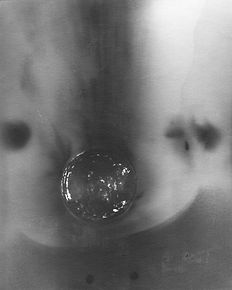
Diffractogram_10_01
Clear Glass Insulator

Diffractogram_02_003
Three Mini Glass Punch Cups

Diffractogram_03_003
Clear Glass Cruet

Diffractogram_06
Clear Drinking Glass

Diffractogram_07_01
Clear Candy Dish Lid

Diffractogram_10_02
Clear Glass Insulator

Diffractogram_03_001
Clear Glass Cruet

Diffractogram_04
Clear Glass Ashtray
Diffractogram_07_01
Clear Candy Dish
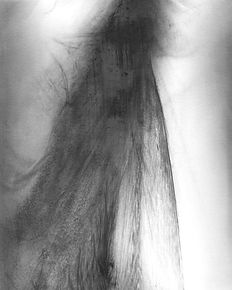
Diffractogram_09
Clear Glass

Diffractogram_11
Clear Glass Bowl

Diffractogram_12
Clear Glass Candy Dish